Tuesday, July 14, 2015

Kingdom - Part 11 - Wolves

http://www.countdown.org/media/attachments/covers/signs/signs_falling-away.jpg

"Behold, I send you out as sheep in the midst of wolves; so be shrewd as serpents and innocent as doves." Matthew 10:16. New American Standard.

About ten years ago, I was sitting on the porch with a friend of mine, and we came up a really awesome idea. We would make signs, go find a homeless person, and stand with them on a street corner. Just to make it look legit and Christiany, we would hand out Bibles as well. And so, we found some cardboard boxes, made a couple cutouts, and wrote some clever sayings. Mine said, "Jesus was homeless." 

Now, I didn't think there was anything very offensive about writing "Jesus was homeless" on a cardboard sign, while standing on a street corner, handing out Bibles. 

Evidently it was though. The Bibles may have been our saving grace that day because who doesn't like free stuff, huh? 

I'll never forget the one guy who cruised past me with his middle finger flying out the window, yelling, "Man, you be shittin' on Jesus! That ain't right!" It was one of those moments of - wow, Jon, you're fightin' the good fight. You just got persecuted for the first time, and it was awesome! Keep going! Keep your head up! You got this!

Looking back at that moment, I realize now how deluded I was in thinking that I was some sort of martyr. I was some sort of hero for doing something that would blatantly piss some people off. But it wasn't necessarily what I wrote on that sign that day, or the Bibles I was handing out, or even the homeless people I met that day. It was the feeling of being persecuted, the feeling of having just "laid my life down for the cause" when, all I was doing was putting words on a cardboard sign, trying to get a point across. You could say that back in the day, I had an extremely huge persecution ego.

Today, I want to talk about wolves. But not wolves in the literal sense, but wolves in the metaphorical sense. The kind of wolves that Jesus was talking about in the passage above. 

But first, I need to make a confession. I've been running this passage through my brain for about a week and a half. I haven't even attempted to write since I first wrote this passage down, because I realize I have a problem. The remnants of that persecution complex  that I had that day with that sign are still with me today. I still read passages like this one, and automatically start going down my mental list of the "wolves" in my life. I've used this passage for years as a way to justify feeling like a martyr, a saint, and a disciple. And as a result, I've used passages like these to condemn the "wolves," aka, the people who disagree with me. 

But here's the deal. The wolves Jesus was talking about here weren't going after the disciples based on their views of abortion, gay marriage, gun rights, illegal immigration, or climate control. The wolves Jesus was addressing were trying to uphold a theocracy. And Jesus was speaking right into the tension of a two-fold theocracy at the time - the Roman Theocracy with claimed that Caesar was Lord, and the Jewish Theocracy which claimed Religion was Lord. 

And everything that Jesus has outlined thus far in describing the "kingdom of heaven," has been diametrically opposed to both theocracies. 

After thinking about this passage for awhile, and having many conversations about who or what the "wolves" could possibly be today, I've come to my conclusion. The wolves aren't necessarily specific people as they are institutionalized opposition to peace. And in Jesus's case, which he lays out in the next verse, the wolves in his day were the rulers of the courts, and the rulers of the synagogues. 

The government and the temple. The politicians and the priests. 

Now the last time I checked, President Obama wasn't getting coins minted with the saying, "Obama is Lord." And, the last time I checked, pastors weren't stoning women for adultery (here in America). So, for all the literalists out there who like to use this passage as fuel for the next abortion campaign or political rally, you don't have any ammunition here. That's just not how it works. 

Go ahead and say what you're gonna say, but expect that you're gonna provoke some people to anger. It's the same for me. Anytime I'm writing, I know that I'm probably gonna piss some people off due to my whacky belief systems. But that doesn't mean that you're a wolf out to get me. It simply means you disagree with me, I with you, and we can still be friends. We can still make it work. 

Although I do think that America has come pretty darn close to becoming a Christian theocracy, we're nowhere close to what it was like in the first century. People were getting killed for believing the things Jesus was teaching. People were getting slaughtered by a government that demanded complete loyalty. People were getting exiled for promoting peace. Persecution was a real thing. Getting killed for what you believe was a real thing. 

I'm pretty sure Jesus wasn't going around and telling people who to vote for. Jesus didn't see the world through a two party system. He didn't see the world through a religious filter, and he didn't see the world through a government filter. He saw the world through a filter of love. 

And believe it or not, there were people who believed that politics and religion trumped love. 

Politics and religion trumped love. Politics and religion trumped love. 

Are we current now? 

As long as I view the world through the lens of politics and/or religion, those views will trump love. What do I mean by this? It means that there will be instances, maybe many, maybe few, in which my political views or my religious beliefs will determine who or how I love someone. In fact, this is the predominant way in which I love. 

And naturally, love will be exclusive when viewed through either of these lenses. On the political side, whom I love will be guided by whom I side with. On the religious side, whom I love will be guided by what set of beliefs I side with. And the "wolves" will naturally be the people on the other side. 

That's why I can be conservative and call all the liberals wolves. I can be Baptist and call all the Catholics wolves. And I can feel justified because I'm doing it the right way. I'm doing it just like Jesus said to. 

But here's the problem. If you spend as much time as I do trying to figure out who all the wolves are in your life, you're missing the point. 

It's not about looking for the wolves. It's not about saying things or doing things that you know are gonna receive blowback. It's about expecting push back and humbly moving forward without feeling the need to feel persecuted about it. It's about continuing to stand up for what you believe in without needing to attack the next person who disagrees because "they're not doing it right."

Right now in America, we are seeing the biggest case of pussification that I've ever seen in my life. Everybody's getting offended by everybody else. I'm in this. I'm right in the middle of it. And one of the byproducts of this is the phenomenon of feeling persecuted. 

Theological and political disagreement is not persecution. Feeling like your rights are being threatened by different ideologies is not persecution. Taking prayer out of schools isn't persecution. And on the other hand, building a pipeline from the Gulf of Mexico to Canada isn't persecution. Having a coin say "In God We Trust" isn't persecution. Saying a prayer before football games isn't persecution. 

We all feel persecuted at times, whether we're conservative or liberal. But we're missing the point. 

The recent attacks on black churches in the U.S. is persecution. It was unexpected. The people in those churches weren't doing anything to provoke anger, or opposition, or hate. They were simply carrying on with their lives, loving the best they could, believing the best they could. And the wolves were prowling. The wolves were ready to attack. 

If you're gay and living in the Middle East, you're being persecuted. The laws call for you to die. The laws call for you to be treated like an animal. That's persecution. 

If you're a homeless person and getting sent to jail for laying on a park bench or accepting food in a city park, you're being persecuted. 

Jesus isn't asking his disciples to turn on their persecution radars and put themselves in situations where they can stir up the pot and provoke a bunch of people to retaliate. He's telling them to be wise and innocent. Or, be careful who you hang out and don't say anything that's gonna cause someone to take you to court. He's not saying, "If you deny gay people their cake, you'll be persecuted."

When we err on the side of love and grace, we're not gonna be concerned with who disagrees with us or who's out to get us. Those things aren't on our radar. What is on our radar is how we can work together to bring more peace, more love, and more compassion to this planet we share. When love is the guiding force by which we live by, we're not holding up signs that say "persecution here!" but moving behind the scenes, gently, humbly, and quietly. We're seeing the world the way Jesus saw the world - as a collection of people who are seeking freedom and seeking how to make sense of this crazy world we live in. 

Monday, June 22, 2015

Kingdom - Part 6 - Freely

 http://blog.dictionary.com/wp-content/uploads/2011/12/gift-big.jpg

"Heal the sick, raise the dead, cleanse the lepers, cast out demons. Freely you received, freely give." Matthew 10:8. New American Standard.


Have you ever received something that was so anonymous that it gives you goose bumps when you think about it today?

About ten years ago, I was struggling big time. I probably couldn't tell that I was struggling as much as the people around me could tell that I was struggling. I was a mess. 

My life rhythm looked like drink . . . sleep . . . drink . . . sleep . . . drink . . . work . . . sleep . . . drink.

And while I was at work I was living for the next drink. And while I was drinking I was living for the next sense of peace. And when I was sleeping, I was living for the hope that I wouldn't have to do it all over again. 

I was miserable and I didn't even have a clue how miserable I really was. 

And right in the middle of all this misery, a gift came. It came in the form of a bus ride. 

I remember receiving a phone call from a friend asking me if I'd like to go to Colorado to be a volunteer at this Young Life camp. And my immediate thought was, "How the hell am I gonna pull this one off?"  

And the voice on the other line said, "Don't worry. It's covered. All you've gotta do is show up to the bus station."

And so, after much deliberation (since I had so much to do), I decided to pack a suitcase and go off to Snow Wolf Park for a month. I rounded up as much tobacco as I could possibly afford, said goodbye to my family (and the alcohol), and jumped on a bus a couple mornings later. 

That month in Colorado provided for me what I couldn't manage to provide for myself: a spiritual awakening. It's like my soul had been craving a reprieve from my dead-end life for months and I didn't even know it. And over the course of that month, I gave myself away to the mission at hand. I cleaned dishes, I swept driveways, and I did all sorts of things that took my mind off of myself. I didn't have time to think about drinking or the misery I would essentially walk back into when I got home. 

For that month, someone gave me the gift of living outside of myself.

I still don't know who paid for that trip. But someone knew I needed it. They could read it all over me. They knew that getting me on a bus to Colorado may save my life.

While that trip didn't end up being the final straw for my drinking, it was one of many gifts that were given to me over the course of my drinking career. It was one instance of someone caring enough about the state of my existence to do something about it. It was one stepping stone on a pathway that would take years to find a destination. But it was a move forward in the right direction. 

We're in the sixth part of the series of the "kingdom of heaven." In the intro, I proposed that when Jesus used this phrase, he was talking about experience a state of being that had to be found within. It couldn't be given by religion, the government, or any entity outside of one's self. He was talking about a "realm" of being that one could experience in this life, right here, and right now. 

I also proposed that in chapter ten of Matthew, Jesus lays out to his audience what it looks like to enter into and to maintain this state of being. And in a nutshell, he says that it looks like helping the powerless, helping people to wake up out of spiritual zombie-ness, and breaking down the constraints that religion tends to place on the spiritual life so that others may feel included and invited into the journey.

And today, we're gonna talk about freely giving as we have freely received. 

There's some things that Jesus says that, in my opinion, are black and white. And this is one of them. There's a lot more things that Jesus says that aren't black and white. They require digging. They require placing one's self in the shoes of a first century Jew who lives in the Roman Empire. They require looking up Greek and Hebrew words that have been lost in the English translation. But in today's verse, there's not much research necessary.

You've received freely, so freely give. 

I told you the story earlier because one, it's one I remember, and two, it comes from a long line of stories just like that one. They're all about the anonymous gifts that I've received over the course of my life. 

There's so many more but I would have to sit on this porch for a whole day in order to tell all of them, but I've gotta get to work in a little bit. 

But the point I think Jesus is making is this one. If we are able to remember just one time that somebody gave something to us freely, it should be enough of a reminder that we're to do the same for somebody else. 

And really, none of us are exempt from these free gifts. We've all gotten them. By default, we were born into this world with nothing except a sheer dependence on the mother who ushered us in. We didn't know how to create our own food, dress ourselves, change our own diapers, or get from one place to another. So every life experience that we learned from the get go was a free gift. All we had to do was . . . well . . . be. 

But eventually we all grew out of the little worlds we experienced as babies. Eventually we developed a thing called self conscience. And eventually we started forming ideas in our heads about the way the world works. And we started seeing the world not through a lens of helplessness, but through a lens of self-preservation. We had to figure out how to make it in this world, and we learned that it wasn't easy. 

And so, we jumped into the stream of life head first, knowing that if we didn't do certain things we wouldn't last long. And in some of those cases, we'd have to make hard decisions that affected other people in negative ways. And it was hard, but we knew we had to keep going even if it meant climbing over other people to get there. 

And what I believe Jesus is saying to his audience in this passage is, "I know you've got a destination, but don't overlook the people around you. Freely give along the way because you were freely given in order to get where you are."

I believe Jesus's next proposal in his outline of "the kingdom of heaven" is to let distractions be a normal part of our routine. I know it sounds counterproductive, like we all have our daily planners out and we just know what we're supposed to do today. But look at the planner as just one of many plans. The planner is the plan of action we think we're gonna take, but most of the time does it really pan out the way it looks like on paper?

The "kingdom of heaven" moments happen between the ink. They happen in the white. They're not planned, they're not thought out, and they just happen. 

They happen whether we want them to or not. And these are the moments where the dude comes up to you at work and needs to talk, and you know that you've got a million things to do today. And you have to face the question, Should I turn around and listen, or should I ignore him? 

Or . . . 

Should I roll down my window or should I keep looking straight? Should I answer this phone call or should I screen it? Should I respond to this email or should I delete it? Should I give her this money or should I keep it? Should I buy him some food or should I eat by myself?

Today, we're all gonna have little invitations to take part in things that require getting out of ourselves. And they're most likely gonna be distracting to our busy schedules. But these moments, if we're paying attention, may just be the moments that usher us into the reality that there's something much bigger going on here than what's on my computer screen. 

May we all have our senses heightened today so that we can seize the kingdom distractions around us.

Friday, June 19, 2015

Kingdom - Part 5 - Demons

http://photos1.blogger.com/blogger/3819/2954/320/gad.jpg

"Heal the sick, raise the dead, cleanse the lepers, cast out demons. Freely you received, freely give." Matthew 10:8. New American Standard. 

Hi folks.

Today, we're gonna talk about demons. 

Yes, I said it. Demons. You know, those evil monsters that like to sneak up on people and turn them into zombies, or cannibals, or demented little girls that can turn their heads all the way around. As you can see, one of my hopes in writing this is to remove some of the power that's been given to these sci-fi gremlins that evidently are secretly hovering around us this very moment.

Be careful. Be very, very, careful.

We're moving backwards, so first we need to acknowledge demons in our culture. So, lets make a list of phrases and words we've all come to know in our crazy literal religious culture. 

The Exorcist. Paranormal Activity. exorcisms. demonology (an actual course study in some seminaries). Satan. Beelzebub. "Exorcise the demon!" ouija boards. spells. evil spirits. possession. angel of death. Fallen. 

Do these all ring a bell? Good.

Now lets move back, a long way back, all the way back to pre-Christianity and pre-Judaism. 

Babylon. The first millenium BCE. 

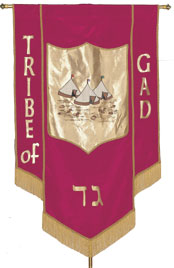
There's a god that we all know, and we call it Gad, or, better known to us as the god of fortune. And there's this radical, nomadic tribe that wanders all over the arid plains of East Africa claiming that their god is the greater than our god. (This tribe will later be called the "chosen people," and even later than that will develop a tributary tribe called the "Christians," but more on that later). 

And so we pray to Gad every day, every night. We pray to Gad before we eat. We pray to Gad all the time. Why? Because we want good fortune, right? Who doesn't want good fortune?

But there's a problem that this wandering tribe has with our Gad (ya' like gads). Our Gad evidently is inferior to this tribe's God (a play on words in our modern scriptures??), so this tribe continuously chooses leaders (or prophets) to enter into our city and tell us we're doing it all wrong. And in doing so, they eventually decide to start infiltrating our city (only to be wiped out eventually by our massive armies) and attempting to destroy all of our versions of worship to the god Gad. god gad. 

Now, lets move forward in time. 1st century Roman world. Babylon is gone and has been replaced with the Roman empire. And, Rome has picked up a lot of Greek mythology. Gods and goddesses, angels and demons, good vs. evil. And one of the words that's become very familiar to us as citizens in this world empire is . . . 

daimon, or, "an inferior deity, whether good or bad"

Does this sound familiar? If you said it sounds like demon, then give yourself a hand clap. 

Now demon is a Greek word. Gad is a Hebrew word. The word demon doesn't exist in Hebrew literature, although there is some Jewish folklore that involves some evil spirits (but not something that was mainstream or widely followed, especially in a literalistic way).

The word demon is an adaptation and word twist of the Hebrew word gad.

In other words, demon = the Babylonian god of fortune (and any deity other than the "one true God"). With me? Good.

So, as a first century Jewish person, we believe that demons include all "versions" of our one, true, God who has picked us out as the chosen ones, the chosen tribe, the tribe above all tribes. 

And this God is the King of Kings, the Lord of Lords, the God above all other gods. 

As good, practicing Jews, we don't talk much about demons because they're just not a common part of our language or our history. The concept is non-essential. It makes for good campfire stories, but it's just not woven into the fabric of our rich, religious tradition. 

But, there's a problem. If the concept of demons isn't an essential part of Jewish tradition, then why does Jesus appear to be talking about demons so much and casting out demons so much? 

One more thing. Every gospel contains multiple accounts of demon related activity. However, Paul's writings (which were closest chronologically to the life and times of Jesus), contain two verses with demons in them, and I'll list them here:

"No, but I say that the things which the Gentiles sacrifice, they sacrifice to demons and not to God; and I do not want you to become sharers in demons. You cannot drink the cup of the Lord and the cup of demons; you cannot partake of the table of the Lord and the table of demons." 1 Corinthians 10:20-21. New American Standard.

If Paul wrote more than any other author in the New Testament, and he was the earliest writer in the New Testament, why did he only mention the word "demon" four times and in only two verses?

Because as a Jew, the concept just wasn't that important.

And, if you notice, the way Paul uses the word fits the context of "other gods." Paul was talking to his audience in these two verses about worshiping other gods, not watching out for evil, invisible creatures that were always ready to attack.

Whoever wrote the book of Matthew was highly influenced by Greek mythology. It plays a part throughout the book and plays a huge part in the uprise of the first church. However, rather than Jesus actually giving so much power to the concept of demons, I think the author of Matthew put the words on Jesus's lips. The author wanted Jesus to be more Greek than Jew, more philosopher than realist. 

But lets say Jesus really would've said something along the lines of "cast out the demons." What would he have meant?

In my opinion, he was the front runner of breakthrough Jewish reform. So, he would've known a ton about Jewish tradition, but would've also been interested in reforming some of the more outdated, unjust, and prejudiced practices and beliefs of the Jewish people. He would've believed in a God who invited everybody to the table (since he practiced this himself), including Jews and Greeks and Romans. 

Jesus was often found right in the melting pot of society on every socio-economic plane. He's caught with beggars one day and with high priests the next. He's caught with prostitutes and Roman soldiers. He doesn't discriminate based on class, and he doesn't discriminate based on belief. 

It's foolish to think that all of Jesus's companions believed the same way he did. Each person had a story, an upbringing, a religious culture of his or her own. And what did Jesus do? He walked right into the middle of it. He worked within it, he loved within it, and he built relationships within it. 

So, to the author of Matthew, Jesus was all about the demons. It was as if the demons were everywhere Jesus went. He couldn't get away from them. But I think this was an exaggeration and a projection of the author's own culture and religious leanings that influenced him or her to write about Jesus in this way. 

But, remember, Jesus is outlining in this chapter what it looks like to participate in the "kingdom of heaven." So, if Jesus even came close to talking about Matthew's version of "casting out demons," what would he be talking about? 

For Jesus, there was only one God. And this God was love. And all that mattered about this God was that this God loved humans more than humans could comprehend. And this God's love worked independently of all the crazy, irrational, religious beliefs that the humans came up with. 

So, if I were to put words in Jesus's mouth concerning demons, he'd say, "You worship other gods? Ok. Lets talk about that. Let me show you how my God works . . . "

This God's love didn't work based on how "right" a person's belief systems were. This God's compassion wasn't based on how well a person prayed. This God's love didn't wait for the right person to say the right thing at the right time. 

This God's love infiltrated the human heart with all its broken, flawed, and messed up philosophies and transformed it gradually from stone to flesh. And Jesus represented this God and wanted to show the world all about this God. 

So, to close.

May we show the world today that Love is more powerful than "wrong" beliefs. May we show the world today that Love breaks down even the hardest of hearts. And may we show the world today that Love can engulf even the whackiest religious minds that we know.


Wednesday, June 17, 2015

Kingdom - Part 4 - Leper

 https://upload.wikimedia.org/wikipedia/commons/4/42/Leper_man_begging_in_India_in_the_1930s_(1).jpg

"Heal the sick, raise the dead, cleanse the lepers, cast out demons. Freely you received, freely give." Matthew 10:8. New American Standard.

In this series, we've been talking about what Jesus meant by the phrase "kingdom of heaven." In the first post I gave an outline about the phrase and proposed that throughout the tenth chapter of Matthew, Jesus outlined what it looked like to "participate" in the kingdom of heaven. 

In the second part, I talked about what Jesus meant (as a first century Jew) by healing the sick, and in the third part I talked about what Jesus meant by "raising the dead." 

In this part of the series, I'd like to talk about what Jesus meant by "cleansing the lepers." But first, some language difficulties. 

The Hebrew word that we derive the word "leprosy" from is tsawrah'ath. In ancient Hebrew, the word was used to describe anything that had mold or mildew, or any person who had a skin disease. And according to ancient Hebrew, skin diseases as well as mold or mildew were considered unclean by the high priests. They were not to be contacted until they were ritually cleansed and considered "clean" by the high priest. 

And there were lists and lists of rules for things and people that were unclean. 

For example, 

"When a garment has a mark of leprosy in it, whether it is a wool garment or a linen garment, 48whether in warp or woof, of linen or of wool, whether in leather or in any article made of leather, 49if the mark is greenish or reddish in the garment or in the leather, or in the warp or in the woof, or in any article of leather, it is a leprous mark and shall be shown to the priest. 50"Then the priest shall look at the mark and shall quarantine the article with the mark for seven days. 51"He shall then look at the mark on the seventh day; if the mark has spread in the garment, whether in the warp or in the woof, or in the leather, whatever the purpose for which the leather is used, the mark is a leprous malignancy, it is unclean. 52"So he shall burn the garment, whether the warp or the woof, in wool or in linen, or any article of leather in which the mark occurs, for it is a leprous malignancy; it shall be burned in the fire. 53"But if the priest shall look, and indeed the mark has not spread in the garment, either in the warp or in the woof, or in any article of leather, 54then the priest shall order them to wash the thing in which the mark occurs and he shall quarantine it for seven more days. 55"After the article with the mark has been washed, the priest shall again look, and if the mark has not changed its appearance, even though the mark has not spread, it is unclean; you shall burn it in the fire, whether an eating away has produced bareness on the top or on the front of it. 56"Then if the priest looks, and if the mark has faded after it has been washed, then he shall tear it out of the garment or out of the leather, whether from the warp or from the woof; 57and if it appears again in the garment, whether in the warp or in the woof, or in any article of leather, it is an outbreak; the article with the mark shall be burned in the fire. 58"The garment, whether the warp or the woof, or any article of leather from which the mark has departed when you washed it, it shall then be washed a second time and will be clean." 59This is the law for the mark of leprosy in a garment of wool or linen, whether in the warp or in the woof, or in any article of leather, for pronouncing it clean or unclean." Leviticus 13:47-59. New American Standard.

 This is quite a set of instructions, and this is for a mark on fabric!

Now, another note. When this Bible was translated, there wasn't a word for this sort of thing. The people who met together to decide what was to go into our modern Bible got together, they decided to use the term "leper" to describe "marks, stains, or skin problems." It was a convenient way for them to go about it since leprosy was a real disease in their world and there was no cure. And lepers were society's stain. 

They decided to use real people with real medical conditions to blanket over anything in the old testament that had to do with stains, skin, or mildew. If it sounds unfair and discriminatory then you're on the right track. 

As a first century Jew living in Rome, you didn't have the word leprosy. Instead, you had rules and laws that pertained to different types of situations in real life. So, if you had a skin disease, the only word you had for it was "unclean." And here's what the rules were for skin diseases:

 "When a man has on the skin of his body a swelling or a scab or a bright spot, and it becomes an infection of leprosy on the skin of his body , then he shall be brought to Aaron the priest or to one of his sons the priests. 3 "The priest shall look at the mark on the skin of the body , and if the hair in the infection has turned white and the infection appears to be deeper than the skin of his body , it is an infection of leprosy; when the priest has looked at him, he shall pronounce him unclean. 4 "But if the bright spot is white on the skin of his body , and it does not appear to be deeper than the skin, and the hair on it has not turned white, then the priest shall isolate him who has the infection for seven days. 5 "The priest shall look at him on the seventh day, and if in his eyes the infection has not changed and the infection has not spread on the skin, then the priest shall isolate him for seven more days. 6 "The priest shall look at him again on the seventh day, and if the infection has faded and the mark has not spread on the skin, then the priest shall pronounce him clean; it is only a scab. And he shall wash his clothes and be clean." Leviticus 13:1-6. New American Standard.

Since there wasn't a cure for skin diseases in ancient times, diseases were thought to be a sign of disdain from the gods. And the only way to make the gods happy was to go through the detailed, tedious process of making the gods happy again. And the only way to make the gods happy was through the high priest of the village. The high priest was the mouthpiece for god. 

Fast forward to modern day 2015. 

Who are the "unclean" in American society? 

It shouldn't take long to figure that one out. Homosexuals. Transgenders. Lesbians. Queers.

I have to give it up to the majority of society and the government though for moving way faster than the American church on pronouncing our LGBTQ communities as "clean." The church just doesn't get it yet, and mostly because of severe misinterpretation and literalism. 

Jesus however had a completely different objective in mind. He seemed to know that the ancient scriptures were inherently misguided on the subject. He seemed to know that stains and disease didn't keep people from connecting with the divine. He seemed to have a very postmodern view of some outdated rules and regulations that he himself would have known pretty well. And he seemed to know that a high priest didn't stand between anyone's relationship with the divine. 

Skin disease back then was a threat to the established religious system. If skin disease was a sign that the gods were angry, then there had to be a way to get the gods happy again. No one wants to live in a city where the gods are angry all the time, so find a way to make people clean and cast them on the outskirts of the city in the meantime. 

Just as in ancient times with leprosy, the mainstream religious ideology holds that the LGBTQ community is a "threat" to the established, archaic, outdated, and bogus system that says the gods are angry with certain people but favor others. Everybody's vying for their position with the gods, and making sure to let the gods know who's unclean. While it has a modern look with all the technological advances we have today, the message is still the same as it was in ancient times. Whatever or whoever is not considered natural or homogenous with the mainstream religious context must be a red flag that the gods are ready to strike at any moment. 

And Jesus turns that idea upside down. He throws it out. He declares it nil and void. So why is it taking so long for the church to follow suit? 

That's a question I don't have the answer for, and it's not worth diving into here. 

Jesus says that to experience the "kingdom of heaven" is to throw out the whole system of "clean and unclean." There are no longer insiders and outsiders, saved and unsaved, clean and unclean. There is no longer a high priest (or a pastor, minister, reverend, etc.) standing in the way between us and God. We have direct access regardless of the condition of our skin or the condition of our sexuality. We are humans seeking to connect with the unspeakable and the mysterious nature of God. 

So, to "cleanse the leper" means to start pronouncing people as clean. And how does that work? It starts by pronouncing myself as "clean." If I believe the gods are angry with somebody else because of their way of life, what does that say about me? It means I still have a remnant of a decaying ideology inside of my mind, distorting the way I view the world and its people. If I can't see my own worth before the divine, then I won't see anybody else's worth before the divine. 

It starts with me. Once I pronounce myself as clean, and believe it, and start living it, I'll begin to see everybody else in a totally different light. 

I once was just as bigoted and prejudiced as the next person. I laughed at homosexuality because I thought it was a joke. I thought it was a way of attracting attention. I wrote it off as "daddy issues." I still held the remnants of "Sodom and Gemorrah" literalistic thinking and saw the world through that lens. 

But that all changed. It turned on its head. Thanks to a couple of friends, I was introduced to the reality that everyone is clean and everyone has direct access to that which they call God. 

And thanks to the teachings of Jesus, I was introduced to the notion that no high priest or religious law will ever determine where I stand with God. Ever. 

Friday, June 12, 2015

Kingdom - Part 3 - "Raise the Dead"

 http://factmag-images.s3.amazonaws.com/wp-content/uploads/2012/03/burial.recall.to_.mind_.09.29.2010.jpg

"Bring health to the sick. Raise the dead. Touch the untouchables. Kick out the demons. You have been treated generously, so live generously." Matthew 10:8. The Message.

Welcome back! Today's makes the second part of a multiple part series on what Jesus was talking about when he talked about "the kingdom of heaven." Some people like to call it the "kingdom of God," and I think they're interchangeable. 

In the introduction, I argued that the kingdom of heaven wasn't about Christianity, but Judaism. It wasn't about the afterlife, but the here and now. It wasn't about converting people through words, but loving on people through action. And on Tuesday, I argued that healing the sick was not this hocus-pocus way of making broken bones restructure on their own or disease automatically disappear, but simply serving the weak and powerless. 

And today, we're going to talk about raising the dead. 
 . . . Yes, I know, as soon as you read that sentence you wanted to shut down the computer and call it a day. But, lets talk about that reaction before we move on. 

What inside you caused you to want to shut down the computer and move to bigger and better things than reading some dumbass's blog on raising the dead? My next question is, what are the odds that you're the only person on this blue planet that wants to shut their computer down every time they hear some blogger talking about raising the dead? (Not very good.)

Now lets take it a step further. If you were Jesus, do you think you'd say . . . I'm just kidding. But really, isn't it odd that Jesus says some things in the 1st century that really turn people off in the 21st century. You'd think that since Jesus is God, he would've supernaturally captured the focus and attention on every human being who ever opened the Bible. You'd think he'd have wooed even the most A.D.D. of us and blown us away with his outlines for living. After all, a God who turned into a man would've been the best, most flawless, most knowledgeable teacher around. He never would've had a problem with boring his students. 

Yet, I can see the yawns happening right now. Oh wait, are you sleeping?? Wake up!

And if I were to take a survey on people's responses when they hear the phrase "raise the dead," I'm pretty sure 99% of the answers would be found in the metaphorical realm. Just a guess but I'll never know until I take a survey. Sounds fun. 

And so, I think you know where I'm heading with this phrase based on what I've said so far, and here's my reasoning:

1. I haven't seen anyone raise from the dead.
2. Although traditional Judaism believes death is not the end of human life, it has very little to say about the subject. After all, Jesus was a Jew, so why would he be so inclined to talk so much about dead people coming to life again?
3. Matthew's Gospel was written approximately thirty four years (at least) after Jesus's death, so by that time there were many non-Jewish ideas that had already entered their way into Jesus's kind of Jewishness - one of those being raising the dead.
4. Science has evolved in so many ways sine the first century, and raising people from the dead evidently isn't one of those ways.

I had an astronomy professor once who began each class with the same phrase: "Suspend your beliefs." He knew that if each of us didn't suspend our beliefs about how the universe worked, we wouldn't learn anything. He knew that he was going to show us things that didn't fit within our philosophical frameworks.  And he was right. I credit him for teaching me that simple but profound little concept. By suspending my beliefs, I was able to see something bigger, something more profound, something greater than I could've ever seen through my philosophical ways of doing things. 

And that's where my journey of losing religion began. And, I'd like to add a disclaimer: I call myself a Christian who leans heavy on the agnostic side because I still believe in God, Jesus, and that infamous little bugger the Holy Casper, I mean Ghost. I haven't lost them. However, I'm intentionally losing the boxes that Christianity and every other religion places around them. 

One of my favorite new found authors - John Shelby Spong - puts it this way: "In order to move into a heightened state of awareness and spirituality, we have to move beyond religion and out to the great unknown." That's from his book, Eternal Life: A New Vision. 

I tend to agree. 

It's not that I'm tired of seeking God or trying to implement the practices that Jesus outlined in the scriptures, or trying to deny the "spirit" inside of me. It's just that I'm tired of letting dogma and doctrine define how they all work and how I'm supposed to interact with them. I have an unquenchable thirst for God, the teachings of Jesus, and the "still, small voice" inside of me, but religious doctrine tends to force me to take on the "gallon challenge" instead of taking it one sip at a time at my own pace. 

And so, on to raising the dead. 

I know what it's like to be spiritually dead. I know what it's like to be stuck in this never ending loop of "God hates me today, maybe he'll love me tomorrow." And part of that loop is, calling God "he." Spiritual death for me looks like having no purpose, no meaning, and a lot of depression. It looks like having a ton of fear that's driving me to do insane things. It looks like picking up a thirty-pack of Lone Star at HEB and saying "fuck it all." 

That's spiritual death for me. 

And, because I live in the 21st century, I have access to a whole lot of information, and because I'm human, I tend to look at history through a lens of my own experiences. Hence, when I talk about spiritual death today, I don't see it being much different this century as it would've looked in the first century. 

People have always searched for truth. People have always searched for meaning. People have always put labels on what they consider "God." The only difference between now and then is the circumstances that led to spiritual death. I believe spiritual death is the same for the agnostic as it is for the Christian. It's the same for the Jew as it is for the Muslim. 

It's this sensation that life has no meaning. And there were people in Jesus's days who saw life as meaningless, just as today there are people who see life as meaningless. 

And that is who I believe Jesus was aiming the instruction of "raise the dead" to. 

Try to wake up the folks who see life as meaningless and purposeless. 

And that's what I think is the main undertone of all of Jesus's messages. Wake up the dead. Show them there's more to life than what they're currently experiencing. 

So what did it look like for me to "raise from the dead?" It looked like getting dead first. It looked like drinking myself to oblivion while hoping the God of my understanding didn't smite me. It looked like making sacrifices to this God every morning in the form of prayer and memorizing scriptures in order get this God to atone for my drinking the night before. It looked like that process eventually halting and hitting a dead end. It looked like not being able to even get up in the morning to atone for my bad deeds. It looked like entering a state of complete loneliness, hopelessness, and loss. 

Dead. 

And the rising part? I don't look at it as a "one moment I'm dead and the next moment I'm alive" kind of thing. I'm still rising. I'm still losing my burial clothes. I'm still shaking off those nasty, smelly rags and washing off those pungent embalming fluids that follow me wherever I go. But, that's life right?

Life for me began (I call it my A.A. birthday) when I first got the notion that I needed to discover what it was inside of me that was off. And boy were there a lot of things inside of that were off. There still are. I'm still rising. And so, with the help of other alcoholics, I was able to begin the life-long process of shaking off those smelly rags, those burial clothes. I was also able to start shaking off those life-long misguided conceptions of the God-who-doesn't-accept-me-like-I-am. 

I had to find my own conception of God before I could get to the Jesus part. I had to re-define the Jesus part before I could get to the Holy Casper - Spirit - part. 

And so, what I believe Jesus is talking about when he tells his disciples to "raise the dead" is to go and try to wake up every spiritually dead person you come across. Talk to them. Dialogue with them. Find a common ground with them. Help them. Invite them into your life and share everything with them. Don't condemn them, but urge them to start shaking off those old burial clothes that are keeping everybody away. Tell them they have their own faith journey and don't have to let religion define who God is for them.

Wednesday, June 10, 2015

Kingdom - Part 2 - "Heal the Sick"

 http://weigandtstudios.com/nona/wp-content/uploads/2014/08/eacad609c2c00f172d6fa8fcae757388.jpg

"Heal the sick . . ." Matthew 10:8. The New American Standard.

I'm really excited about today's post, because it's the first time I've ever done something like this. I've never actually done a series on "kingdom of heaven," so it's exhilarating to get to do this. Now, I'll tell you this: this series will probably be different than any other series you've heard on this topic, or it may be old news to you. 

This is how it works: I don't know. In my mind, I imagine a perfectly outlined flow and rhythm and a connection between each of these posts. That's my hope. Last post, I got a hunch that Jesus was about to unload a bunch of info on what it looks like to participate in "the kingdom of heaven." This phrase is so packed full of richness that it's driven people to do some pretty crazy things, right? From the first Christians to Constantine to faith healing to the Inquisition to going on mission trips to speaking in tongues to picketing abortion clinics to advocating for gay marriage, this phrase has stirred the hearts of countless truth seekers for centuries. 

And I believe we get a pretty good picture of what Jesus meant by this profound phrase if we just dig a little deeper. As I stated last post, I believe Jesus gave the outline of what this phrase means in Matthew chapter ten, and my aim is to turn it over, look at it, question it, doubt it, criticize it, and understand in the best way I can what exactly he was talking about.

But, in order to do so, I believe we have to place ourselves in the shoes of a first century Jew in order to even come close to extracting the meaning behind this oft-misquoted and misused phrase.

And the first directive associated with Jesus's phrase is heal the sick.

So, are you ready? 

Shall we move on?

Ok, here we go.

First - two new words (or, really old words that are probably new to you).

Therapeuo (does this word sound familiar?) It means to serve or to do service. 

So, to therapeuo the sick means to serve or do service to the sick. Still with me? Good.

The second word is astheneo. It means to be weak, feeble, without strength, powerless. 

Therapeuo the astheneo, 

or,

Serve or do service for the weak, feeble, those without strength, and those who are powerless. 

In other words, heal the sick. 

Now, a little history lesson on sickness in the 1st century Roman world: living in first century Rome was challenging (an understatement). Life expectancy for men was around 35 years, and for women it was even less. It is known today that unless you had a lot of money (which you most likely didn't), you didn't have access to the finer things in life like clean water, private toilets, and street sewage. Things just weren't clean back then. Sanitation was a concept that just wasn't off the ground yet. 

However, there was medicine, and there were scientific breakthroughs happening in the first century. But medicine for the most part was a mix of science and religion. Medicine was more therapeutic than anything, although there were some surgical tools that had been developed and were in the process of being developed. 

So, it was common to go to the doctor and to get prescribed some kind of herb that was attributed to combating whatever illness you had, and it was also common to get prescribed a therapeutic bath. 

Now all throughout Rome, there were bathhouses, and these bathhouses served several purposes. One, people actually bathed in them (yes, together), and two, the waters of said bathhouses were claimed to have healing properties (not sure how much healing was actually involved since they were probably full of bacteria). 

And, as a Roman citizen (whether you were a Jew or not), you would've heard the name Asklepion  being thrown around. It may have been used in a sentence like, "Dude, you're sick. You'd better get to the pool so Asklepion can make you better." 

If you haven't figured it out yet, Asklepion was the Roman god of healing. 

Still with me? Good. 

Now, a story.

I was in a small group that met every Saturday night. And every Saturday night, we would come together, share a meal, and draw a piece of paper out of a hat. On these slips of paper were what everyone had written down as their favorite things to do. And one of the favorite things to do was to visit this local nursing home. 

And so, we visited this local nursing home. And, we met a sweet lady who was full of energy, love, and rebelliousness. Yes, she was rebellious. She also carried around an oxygen tank because she had severe breathing problems. When we told her about how we'd get together every Saturday night, she asked if she could join us. And so, we started picking her up every Saturday. We did all sorts of things together: played board games, went to dinner, went to the symphony . . . and she loved it. She loved it because she was normally stuck, without visitors, in the nursing home. 

Every time we took her back, she couldn't wait for the next adventure with the group. And it seemed like, every time we took her out, she turned into a new person. We got to see a side of her that we'd never see inside the nursing home. 

After about a year of taking her on our wild adventures, we got word that she'd passed away one night. While it caught all of us off guard, we couldn't help but think about all the memories that we'd created with her. She'd done so much to contribute to our outings, our fellowship, and our well-beings. The time we got so spend with her in the last year was rich, exciting, fun, and full of purpose.

It was full of Therapeuo-ing the astheneo.

Now, back to Jesus. 

I believe Jesus was directing this message to both the Jews and the Romans. As a weak and powerless person, access to the Jewish temple was pretty much cut off. And being sick and powerless had a very religious taboo associated with it. It was thought among the Jewish leaders that if you were sick, then it was your way of paying for past sins or your parents' past sins. And so, instead of getting to join with the other Jews and participating in the regular Jewish traditions, you were left to "deal" with your sins through your sickness. 

And as a sick Roman, your chances of getting well were slim to none. You had to hope that the god Asklepion would heal you, and so you'd be willing to go to any length to let the waters of Asklepion wash over your ailing body. 

So, being a sick Jew who lived in Rome was not a good time. 

You were an outcast on both fronts - religion and culture. 

And this brings us back full circle. 

Jesus - by introducing the human being as a means of healing - essentially says that neither the god Asklepion nor religion is going to make you well. 

People can help you get well. 

And so, for Jesus, the first part of participating in "the kingdom of heaven" was serving the powerless.

Therapeuo-ing the astheneo.

Healing the sick.

So, what does healing the sick look like today for those of us who aren't physicians (I'm assuming the majority of Jesus's audience weren't doctors)? It looks like noticing the weak, the feeble, those without strength, and those who are powerless. It looks like serving them. It looks like taking them out for coffee, sharing a conversation, going to the symphony, and playing board games. It looks like physically taking them out of the dark and bringing them into the world of adventure and energy. 

It's about bringing our imagined concepts of heaven to earth. For Jesus, it was about restoring a broken world, not making it more broken.

At the end of this month, my wife and I are going to participate in the Houston pride parade. I've never done it and never even thought about doing it. Until now. We'll be joining our church, marching, and she'll be driving the leading float. And I believe that we'll get a taste of what Jesus was talking about. I believe we'll get to experience what it looks like to serve those who've been cast aside for far too long by religion and culture. 

As we go out today to our jobs, our families, and our friends, may we notice the weak, the feeble, and the powerless. May we aware that "the kingdom of heaven is at hand," and that we absolutely get to take a part in healing the sick. Grace and peace.